

Choosing the right coconut variety is essential for importers, distributors, and food processors who depend on consistent quality and reliable supply. In Belize, two of the most important commercial varieties are the Brazilian Green Dwarf (BGD) and the Chactemal Hybrid. Both offer strong advantages for large-scale production and export markets.
Understanding the differences between these two varieties helps buyers make informed procurement decisions.
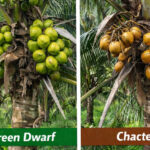
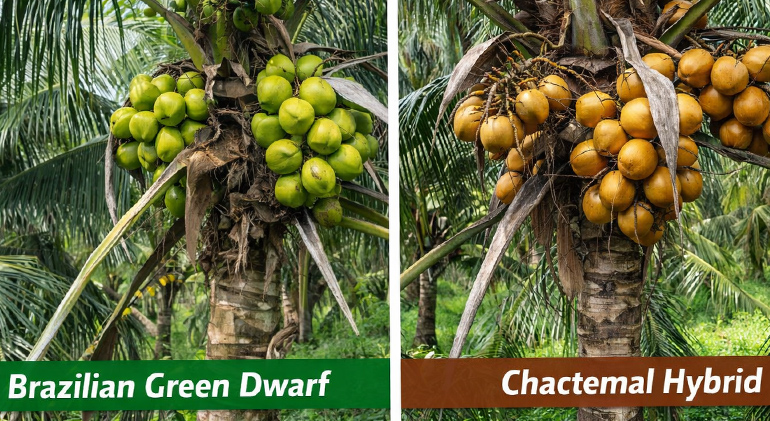
Brazilian Green Dwarf Coconut
The Brazilian Green Dwarf is widely recognized for its early production and manageable tree height. This variety is especially valued in the fresh coconut water market.
Key Characteristics:
- Begins producing earlier than traditional tall varieties
- Medium-sized fruits with strong water content
- More manageable tree height for harvesting efficiency
- High suitability for fresh green coconut export
Because of its productivity and consistent fruit quality, Brazilian Green Dwarf coconuts are often preferred for beverage processing and fresh consumption markets. Its earlier fruiting period also allows farms to reach commercial production faster.
For buyers seeking reliable supply of fresh green coconuts for water extraction or retail distribution, Brazilian Green Dwarf is a strong option.
Chactemal Hybrid Coconut
The Chactemal Hybrid is a crossbreed developed to improve yield and disease resistance while maintaining good fruit quality. It is known for strong performance under tropical conditions.
Key Characteristics:
- High productivity potential
- Good tolerance to disease pressures
- Suitable for both water and dry coconut markets
- Strong adaptation to Belize’s agro-climatic conditions
Chactemal coconuts are versatile and perform well in both fresh and dry coconut markets. This makes them attractive for buyers who require flexibility in product use — whether for water, copra, or processing applications.
Production Efficiency & Yield
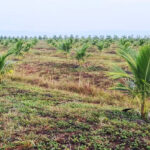
Modern coconut farms in Belize often integrate drip irrigation systems and improved farm management practices to maximize yield from both varieties. With proper irrigation and fertilization, high-performing palms can produce significant annual fruit output, supporting bulk export volumes.
Both Brazilian Green Dwarf and Chactemal Hybrid varieties are suitable for large-scale plantations and container-level shipments.
Which Variety Is Better for Export?
The answer depends on market demand.
- For fresh coconut water markets → Brazilian Green Dwarf is often preferred.
- For flexible processing and dual-use (water + dry) → Chactemal offers versatility.
- For long-term bulk supply contracts → A combination of both varieties strengthens supply stability.
Many commercial producers cultivate both varieties to diversify risk and ensure consistent year-round production.
Why Variety Matters for Bulk Buyers
For procurement managers and importers, variety selection affects:
- Water yield
- Fruit size consistency
- Disease resistance
- Harvest timing
- Production reliability
Working with a supplier that cultivates improved varieties under structured farm management ensures better contract fulfillment and long-term supply security.
The Advantage of Belize-Grown Varieties
Belize’s tropical climate, established coconut acreage, and expanding commercial plantations provide a strong foundation for producing both Brazilian Green Dwarf and Chactemal Hybrid coconuts at scale.
For international buyers, sourcing from farms that cultivate improved varieties using modern agricultural systems enhances production stability and export readiness.